Rollingwood Tree Planting Rules and Permit Requirements
Understanding Tree Planting in Rollingwood: A Veteran Contractor's Guide to Local Requirements
Tree planting in Rollingwood comes with specific rules and expectations that every property owner needs to understand before breaking ground. Over my twenty-plus years in construction and land development across Central Texas, I've watched communities evolve their approach to protecting natural resources, and Rollingwood has developed one of the most comprehensive tree management systems I've encountered. The city takes its tree canopy seriously, and for good reason—these mature trees define the character of the neighborhood, provide shade that actually matters in our Texas heat, and help manage stormwater in ways that save everyone money down the line.
When you're planning any project on your Rollingwood property, whether it's new construction, a major renovation, or even just routine maintenance, you need to know how the local tree ordinance affects your plans. I've helped dozens of clients navigate these requirements at Earth in Motion, and I can tell you that understanding the rules upfront saves frustration, delays, and unexpected costs. Let me walk you through what actually matters.
Which Trees Are Protected in Rollingwood?
Not every tree on your property falls under Rollingwood's protection rules, but quite a few do. The city has identified ten specific species that receive special status, and if you've got any of these on your lot, you need to pay attention. The protected list includes all oak varieties—and believe me, there are plenty of those in this area—along with pecan, bald cypress, Texas ash, cedar elm, American elm, Texas madrone, bigtooth maple, Arizona walnut, and eastern black walnut.
Here's the practical part: protection kicks in when a tree reaches twelve inches in diameter measured at four and a half feet above the ground. That's roughly chest height for most people, which makes it easy to remember. If your tree is smaller than that threshold, it's not technically protected under the ordinance, though I'd still encourage you to think carefully before removing healthy trees of any size.
During my time working on properties throughout the Austin area, I've learned that the healthiest landscapes are the ones where mature trees are treated as valuable assets rather than obstacles. These protected species didn't make the list by accident—they're native or well-adapted to our climate, they provide significant environmental benefits, and they contribute to property values in ways most people don't fully appreciate until they're gone.
Why These Species Matter for Your Property
From a construction and land management perspective, these protected trees serve multiple functions. Their root systems help stabilize soil, which matters tremendously on the slopes and hillsides common in Rollingwood. Their canopies reduce heat island effects, meaning your property stays cooler and your energy bills stay lower. And when we're designing drainage solutions or erosion control measures, existing mature trees often become key components of the overall strategy.
I've seen properties where removing one large oak created drainage problems that cost thousands to fix. The tree had been managing water flow for decades, and once it was gone, that water had to go somewhere. Smart property planning integrates existing trees rather than working against them.
The Replacement Requirements You Need to Know
If you do need to remove a protected tree—and sometimes that's unavoidable for safety reasons or legitimate development needs—Rollingwood requires you to plant replacement trees. The ratio depends on where the tree is located on your property, and this is where things get specific.
For trees in buildable areas, you're looking at a one-to-one replacement. Remove one protected tree, plant one replacement. But for trees in green spaces or setback areas, the requirement jumps to three-to-one. Remove one tree from a setback, and you need to plant three new ones. The city does cap the maximum number of replacement trees to keep things reasonable, but that three-to-one ratio catches a lot of people by surprise.
The logic behind this difference makes sense when you understand what the city is trying to accomplish. Setback areas and green spaces are specifically meant to maintain tree canopy throughout the neighborhood. These zones create the continuous tree cover that defines Rollingwood's character and provides community-wide benefits like air quality improvement and habitat connectivity. When you remove a mature tree from one of these areas, you're affecting more than just your property.
What Counts as a Replacement Tree
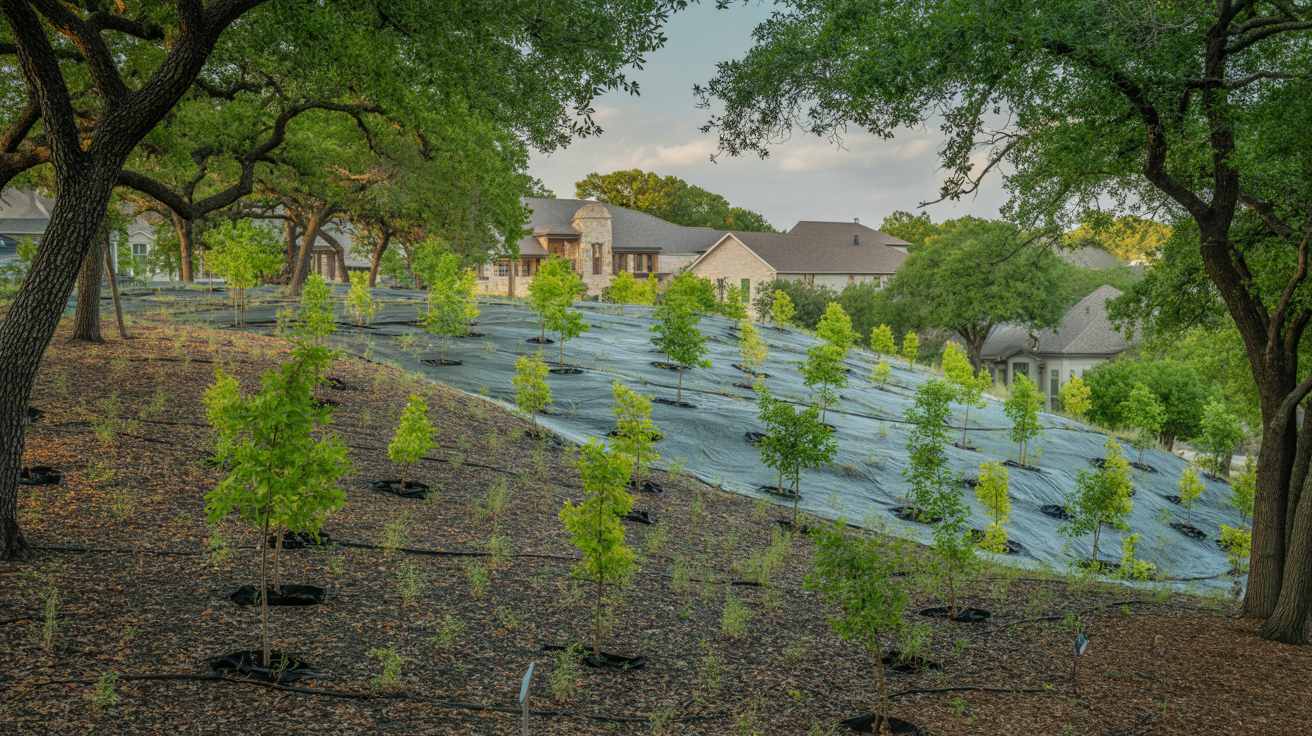
Not just any sapling qualifies as a replacement tree. Rollingwood specifies minimum standards for size, health, and species. Generally, replacement trees need to be at least eight feet tall at planting and meet certain trunk diameter requirements. They need to be healthy specimens without significant disease or structural damage, and they typically need to come from the city's approved species list.
This is where working with experienced contractors becomes important. At Earth in Motion, we source replacement trees from reputable nurseries that understand these requirements. We've learned which species establish well in Central Texas conditions, which ones are worth the investment, and how to properly install them so they actually survive and thrive rather than becoming expensive replacements for replacements.
Navigating Permits and Compliance
Here's something that surprises people: you don't need a permit to plant a tree in Rollingwood, but you absolutely need one to remove or trim a protected tree. This makes sense from an enforcement standpoint—the city wants to preserve existing canopy, not restrict new planting—but it means you can't just hire someone to take down that oak in your backyard without going through the proper channels first.
The permit process requires documentation. You'll need to show exactly which trees you're planning to remove, their size and species, and your replacement plan. For development projects, you'll need a complete tree survey showing all protected trees on the property, along with a tree protection plan that explains how you'll safeguard trees that aren't being removed during construction.
I've been through this process many times with clients, and I'll tell you that preparing thorough documentation upfront moves things along much faster than trying to add information later. The city arborist reviews these applications, and they know what they're looking at. Detailed plans with clear measurements and realistic replacement proposals get approved. Vague sketches with unclear intentions get sent back for revision.
Working with Qualified Contractors
Anyone doing tree work in Rollingwood—whether it's removal, trimming, or even significant pruning—needs to carry a valid city-issued tree-trimming permit. This permit needs to be visible at the worksite. This requirement protects property owners because it ensures that contractors doing tree work have met minimum standards and are accountable to the city.
When Earth in Motion handles projects involving tree work, we coordinate with certified arborists who hold the necessary permits and insurance. This isn't the kind of work you want to trust to the cheapest bidder who shows up with a chainsaw. Improper tree removal can damage your property, create liability issues, and leave you facing compliance problems with the city if the work wasn't properly permitted.
The Oak Wilt Protection Period
One of the most important restrictions in Rollingwood's tree ordinance involves oak trees specifically. You cannot trim or prune any oak tree between February first and June thirtieth. This blackout period exists to prevent the spread of oak wilt, a fungal disease that has devastated oak populations across Central Texas.
Oak wilt spreads through root grafts between nearby trees and through beetle vectors that are attracted to fresh wounds in oak bark. The beetles are most active during spring months, which is why the city prohibits pruning during that window. If you trim an oak during the restricted period, you're looking at a five-hundred-dollar fine, and trust me, the city enforces this. More importantly, you could be starting an oak wilt infection that eventually kills multiple trees on your property and your neighbors' properties.
I've worked on properties where oak wilt took out half a dozen mature trees in the span of two years. Once it gets established, it spreads quickly through interconnected root systems. The financial loss from dead trees, removal costs, and replacement planting runs into tens of thousands of dollars. Respecting the oak pruning prohibition isn't just about avoiding a fine—it's about protecting a significant investment in your property.
Emergency Situations and Exemptions
The city does recognize that genuine emergencies happen. If a tree poses an immediate danger to people or property—storm damage, disease that's causing structural failure, roots undermining foundations—you can address that situation even during the oak wilt protection period. But you need to document the emergency, get proper approval, and use contractors who understand disease prevention protocols.
For oak work during the restricted season, that means immediately painting all cut surfaces with approved sealant to prevent beetle access. It means properly disposing of diseased wood rather than leaving it stacked in your yard where it becomes a breeding ground for the fungus. These aren't optional extras—they're requirements based on decades of research into how oak wilt spreads and how to stop it.
The Good Neighbor Program Solution
One of the more innovative aspects of Rollingwood's tree ordinance is something called the Good Neighbor Program. This addresses a real problem: what happens when you're required to plant replacement trees but your property doesn't have suitable space? Maybe your lot is small, or maybe the buildable area and setbacks are already heavily planted.
The Good Neighbor Program allows you to plant required replacement trees on a neighboring property, with that neighbor's consent. This creates flexibility while still maintaining the community's overall tree canopy. If your neighbor has space that would benefit from additional trees, and you need to fulfill a replacement requirement, this program creates a win-win situation.
I've helped several clients work through Good Neighbor arrangements. The key is clear communication and proper documentation. You need written agreement from the property owner where trees will be planted, and you need to submit that agreement as part of your permit application. The city wants to make sure that replacement trees are actually going to be maintained and that everyone involved understands the arrangement.
Alternative Planting Locations
Beyond the Good Neighbor Program, the city sometimes allows alternative planting arrangements. These might include contributions to municipal reforestation efforts or planting in other suitable locations that serve community-wide canopy goals. These alternatives aren't automatic—they require approval from the city arborist and typically come into play when on-site planting genuinely isn't feasible.
The important thing to understand is that the city's primary goal is maintaining and expanding tree canopy, not making property owners jump through arbitrary hoops. If you approach the process in good faith with realistic proposals, the city generally works with you to find solutions that meet both your needs and their environmental objectives.
Cost Factors in Tree Planting and Removal
People always want to know what tree work costs, and the honest answer is that it varies dramatically based on several factors. Tree size makes an enormous difference—removing a sixty-foot oak with a three-foot trunk diameter requires specialized equipment, extensive safety measures, and significantly more labor than removing a fifteen-foot cedar elm.
Location on your property affects costs as well. A tree that's easily accessible from the street with clear working space is straightforward to remove. A tree that's wedged between your house and your neighbor's fence, overhanging structures, with utility lines running through it? That's a complex job requiring careful planning and skilled execution, which takes more time and specialized expertise.
The replacement obligation multiplies costs, particularly when you're dealing with that three-to-one ratio for setback areas. You're not just paying for removal—you're paying for sourcing appropriate replacement trees, preparing planting sites, installation labor, and often initial maintenance to ensure establishment. Quality replacement trees at the required size aren't cheap, and proper installation takes skill and attention to detail.
Factors That Drive Your Project Investment
Soil conditions influence how much preparation is needed for planting. Rollingwood sits on limestone-heavy soil, which is typical for this area but creates specific challenges. Sometimes we need to improve planting areas with amended soil, address drainage concerns, or work around shallow bedrock. These aren't problems that should be ignored—a tree planted improperly in poor conditions becomes a maintenance headache and usually fails within a few years.
Permit and compliance requirements add administrative time and costs. You're paying for tree surveys, for arborist consultations, for permit applications, and sometimes for design services to create tree protection plans. These aren't optional extras—they're requirements built into how Rollingwood manages its tree canopy. Budget for them from the start rather than being caught off guard.
Timing constraints affect project scheduling, particularly with oak wilt restrictions and seasonal planting considerations. The best time to plant most trees in Central Texas is fall through early spring when they can establish root systems before facing summer heat stress. If your project timeline runs into summer months, expect to invest more in irrigation and monitoring to keep newly planted trees alive.
Recent Changes and Current Requirements
Rollingwood updated its tree ordinance as recently as April of this year. These updates refined provisions around development-related tree removal, strengthened tree protection during construction, and expanded the role of the city arborist in reviewing compliance. If you're working from older information or assumptions about what's required, you need to check current regulations.
The trend across Central Texas communities has been toward stricter tree protection and more comprehensive urban forestry management. This reflects growing recognition of how valuable mature tree canopy is for environmental health, property values, and quality of life. Rollingwood isn't unique in this approach—it's part of a broader shift in how communities think about trees as infrastructure rather than just landscaping.
From my perspective as a contractor, these evolving standards actually make planning easier in some ways. Clear requirements mean fewer disputes about what's needed and what's acceptable. When everyone knows the rules upfront, projects move more smoothly and clients get outcomes that meet community standards while still accomplishing their development goals.
Staying Current with Requirements
Before starting any project that might affect trees on your Rollingwood property, contact the city's Development Services office. They can provide current information about permit requirements, connect you with the city arborist if needed, and help you understand what documentation you'll need to submit. Their number is 512-327-1838, and calling them before you start planning saves headaches down the road.
The city maintains an online portal for permit applications, which streamlines the submission process once you've gathered the required information. Review current ordinances at the city's website rather than relying on what a neighbor told you or what was true five years ago. Requirements change, and working with outdated information creates problems.
Practical Strategies for Property Owners
Based on two decades of working on properties in this area, I can offer some practical guidance that goes beyond just understanding regulations. First, think long-term about your property's tree canopy. Mature trees take decades to develop, and the decisions you make now about what to preserve and what to plant determine what your property looks like and how it functions for years to come.
When possible, design around existing healthy trees rather than removing them. At Earth in Motion, we've planned building additions, pool installations, and major landscaping projects that incorporated existing trees as design features rather than obstacles. This approach usually saves money compared to removal and replacement, and it preserves the immediate benefits those mature trees provide.
If removal is necessary, plan your replacement planting thoughtfully. Don't just meet minimum requirements—think about where trees will provide the most benefit for shade, privacy, erosion control, or aesthetics. Consider mature size when selecting species and planting locations. That cute sapling could become a sixty-foot tree in twenty years, and you want it positioned where that mature size works with your property rather than against it.
Working with Experienced Contractors
Choose contractors based on experience with local requirements and demonstrated ability to deliver quality results, not just low bids. Proper tree work requires specialized knowledge, appropriate equipment, adequate insurance, and attention to detail that shows up in outcomes. I've spent my career building a reputation for solving problems correctly rather than creating new ones, and that's the standard you should look for in anyone working on your property.
Ask potential contractors about their familiarity with Rollingwood's ordinances, their process for obtaining necessary permits, and how they handle compliance documentation. If they're vague about requirements or suggest shortcuts around regulations, walk away. You're ultimately responsible for compliance on your property, and working with contractors who don't take that seriously creates liability for you.
Environmental Benefits Beyond Compliance
While much of this discussion has focused on regulatory requirements, it's worth stepping back to remember why these rules exist. Trees provide tangible benefits that affect everyone's property values and quality of life. They reduce urban heat, improve air quality, manage stormwater runoff, provide habitat for wildlife, and create the neighborhood character that makes Rollingwood desirable.
I've worked throughout Central Texas and seen communities that didn't protect their tree canopy. The difference is striking. Neighborhoods with mature trees feel cooler, look more established, and command higher property values. Areas that developed without tree protection often look stark and feel uncomfortably hot during summer months. The environmental benefits aren't abstract—they show up in measurable ways on your utility bills and in how much you enjoy spending time outdoors.
Strategic tree planting also addresses practical problems. Properly located trees provide afternoon shade that reduces cooling costs, create windbreaks that protect structures, and help manage water flow across your property. When I'm working with clients on comprehensive property improvements, trees are part of the integrated solution rather than separate landscaping elements.
Moving Forward with Your Project
If you're planning work on your Rollingwood property that involves trees, start with education about requirements before you commit to specific plans. Understand what trees you have, which ones are protected, and what compliance will look like if removal becomes necessary. This knowledge allows you to make informed decisions rather than discovering limitations after you've already invested in design work.
Budget realistically for compliance costs including permits, surveys, arborist consultations, and replacement trees. These expenses are real, and underestimating them creates problems mid-project when you're already committed. Factor in time for the permit review process so you're not facing delays that affect other aspects of your project timeline.
Consider bringing in experienced contractors early in your planning process. At Earth in Motion, we often consult with property owners before final plans are drawn to identify potential issues and opportunities. This early involvement helps avoid designs that create unnecessary conflicts with tree protection requirements or miss chances to use existing site features effectively.
Ultimately, successful tree planting in Rollingwood comes down to understanding requirements, planning thoroughly, and working with professionals who know how to deliver quality results while meeting community standards that protect the environmental assets everyone values in this neighborhood.
Frequently Asked Questions About Tree Planting in Rollingwood
Do I need a permit to plant trees on my Rollingwood property?
No, you don't need a permit to plant new trees in Rollingwood. However, if you need to remove or trim any protected trees to make space for new plantings, those activities do require permits. Protected trees include all oak varieties, pecan, bald cypress, Texas ash, cedar elm, American elm, Texas madrone, bigtooth maple, Arizona walnut, and eastern black walnut that measure 12 inches or more in diameter at chest height. At Earth in Motion, I help clients navigate the permit process for tree removal while planning comprehensive planting strategies that enhance their property's canopy and meet all local requirements.
What are the replacement requirements if I have to remove protected trees for my project?
Rollingwood requires different replacement ratios depending on where the tree is located on your property. For trees in buildable areas, you need a one-to-one replacement, but for trees in green spaces or setback areas, the requirement jumps to three-to-one replacement. The replacement trees must meet specific standards—typically at least 8 feet tall, healthy specimens from the city's approved species list. Through my experience at Earth in Motion, I help clients understand these ratios early in the planning process and develop realistic replacement strategies that may include the Good Neighbor Program, where you can plant required trees on a neighbor's property with their consent.
When can I trim oak trees, and why are there restrictions?
You cannot trim or prune oak trees in Rollingwood between February 1st and June 30th due to oak wilt prevention measures. This blackout period protects against a fungal disease that spreads through beetle vectors attracted to fresh wounds during spring months. Violations result in $500 fines, but more importantly, improper timing can start oak wilt infections that kill multiple trees across properties. At Earth in Motion, I coordinate all oak tree work outside this restricted period and ensure proper disease prevention protocols are followed, including immediate sealing of cut surfaces and proper disposal of diseased wood.
What factors determine the cost of tree removal and replacement in Rollingwood?
Several factors significantly impact your investment in tree work. Tree size makes the biggest difference—a massive oak with a three-foot trunk requires specialized equipment and extensive safety measures compared to smaller specimens. Location affects complexity, as trees near structures, utility lines, or in tight spaces require more careful planning and execution. Soil conditions in Rollingwood's limestone-heavy terrain often require site preparation and soil amendments for successful replacement plantings. The replacement ratios multiply costs, particularly the three-to-one requirement for setback areas. Permit requirements, tree surveys, and compliance documentation add administrative costs. At Earth in Motion, I provide comprehensive assessments that account for all these factors so clients can budget realistically from the start.
How do I ensure my replacement trees will survive and thrive in Central Texas conditions?
Successful tree establishment in our Austin area climate requires careful species selection, proper site preparation, and strategic timing. I focus on native and well-adapted species that can handle our limestone soils, summer heat, and occasional drought conditions. The best planting window is fall through early spring, allowing trees to establish root systems before facing summer stress. At Earth in Motion, I address soil drainage issues common in Rollingwood, amend planting areas as needed, and design irrigation strategies for the critical first year. Proper installation depth, root zone preparation, and initial pruning all contribute to long-term success. I also help clients understand maintenance requirements so their investment in replacement trees provides decades of benefits rather than becoming expensive failures that need replacement again.
Hire Us