Austin Tree Planting Guide: Native Species & City Rules
If you're considering tree planting in Austin , you're making a decision that goes far beyond aesthetics—you're investing in the long-term health of your property, your community, and the environment we all share. I'm Chad Burnell, founder of Earth in Motion, Inc., and over the past two decades of working in construction and land management right here in Central Texas, I've seen firsthand how the right tree in the right place can transform a landscape. I've also seen what happens when people skip the planning, ignore our unique climate, or don't understand the local regulations. That's why I want to walk you through everything you need to know about planting trees successfully in Austin—from choosing native species to navigating city ordinances to ensuring your new trees thrive for generations.
Why Tree Planting in Austin Requires Local Knowledge
Austin isn't just another city in Texas. Our climate, soil composition, and urban forest regulations create a unique environment that demands specialized knowledge. When you plant a tree here, you're working with alkaline soils that can challenge root development, intense summer heat that stresses young saplings, and periodic drought conditions that test even established trees. Add to that a detailed city ordinance system designed to protect our urban canopy, and you quickly realize that successful tree planting requires more than just digging a hole and dropping in a sapling.
During my years running Earth in Motion, I've worked on countless projects where trees played a critical role in site planning—from residential landscaping to larger development work. What I've learned is that Austin's environment rewards those who respect its conditions and punishes those who don't. A tree that thrives in Houston or Dallas might struggle here. A planting technique that works in Colorado, where I've also done extensive work, needs adaptation for our Central Texas reality.
Understanding Austin's Climate and Soil Challenges
Our growing season is long, which sounds like an advantage until you factor in the brutal heat of July and August. Young trees planted without proper consideration for water availability and sun exposure simply won't make it. The soil here tends to be rocky and alkaline, which affects nutrient availability and drainage. I've seen property owners lose entire plantings because they didn't account for these factors or didn't prepare the planting site properly.
The good news is that once you understand these challenges, you can work with them rather than against them. Native and adapted species have evolved to handle our conditions. They've developed root systems that can find water during dry spells and tolerate our soil chemistry. When you choose trees that naturally belong here, you're setting yourself up for success from day one.
Choosing the Right Trees for Austin's Environment
Species selection is where most tree planting projects succeed or fail. I always tell clients that the right tree in the right place is the foundation of everything else. It doesn't matter how perfectly you dig the hole or how carefully you water if you've chosen a species that fundamentally can't thrive in our environment.
Native species like live oaks, Texas red oaks, cedar elms, and bur oaks have proven themselves over centuries in this region. These trees understand Austin's weather patterns, soil conditions, and pest pressures. They don't need constant intervention to survive. A well-placed live oak will outlive you, your children, and probably your grandchildren, providing shade, cooling, and beauty the entire time.
Native Species That Thrive in Central Texas
Live oaks are probably the most iconic tree in Austin, and for good reason. They're incredibly drought-tolerant once established, provide year-round shade with their evergreen leaves, and develop massive canopies that can cool entire yards. I've worked on properties where a single mature live oak reduced summer cooling costs noticeably just by shading the western side of a house.
Texas red oaks offer brilliant fall color and grow relatively quickly compared to other oak species. Cedar elms are workhorses—tough, adaptable, and able to handle poor soil and limited water. Bur oaks develop deep taproots that make them incredibly drought-resistant. Pecans are wonderful if you have the space, offering both shade and edible nuts, though they do require more water than some other natives.
Bald cypress might surprise people as a recommendation, but these trees are remarkably adaptable. While they naturally grow in wet areas, they also tolerate our dry conditions once established. Their fine, feathery foliage provides filtered shade, and they're one of the few deciduous conifers, losing their needles in winter.
Avoiding Common Species Selection Mistakes
One mistake I see repeatedly is planting trees too close to structures, utility lines, or other trees. People fall in love with a sapling at the nursery and don't think about what it will look like in twenty years. That cute little oak will eventually have a canopy spread of sixty feet or more. If you plant it fifteen feet from your house, you're creating future problems—root intrusion into foundations, branches threatening your roof, and constant maintenance headaches.
Another error is choosing trees based on appearance in other climates without considering how they'll perform here. Some species that look beautiful in photographs from the Pacific Northwest or the Eastern Seaboard simply won't adapt to our conditions. They'll struggle, require constant care, and often succumb to stress, disease, or pest problems within a few years. That's a waste of your money, your time, and your effort.
Timing Your Tree Planting for Maximum Success
In Austin, timing isn't just important—it's critical. The optimal window for planting trees runs from October through March, with the sweet spot being late fall through early spring. This timing takes advantage of our cooler, wetter months, giving young trees a chance to establish root systems before they face their first brutal summer.
When you plant during this window, you're working with nature instead of fighting it. Cooler temperatures mean less transpiration stress. Occasional winter rains help settle soil and provide natural irrigation. Root growth continues during our mild winters, even when top growth is dormant. By the time May and June arrive with their heat and dry conditions, your tree has several months of root development to draw on.
Why Summer Planting Is Usually a Mistake
I've had clients ask me to plant trees in July or August because that's when they're finally ready to move forward with their landscaping project. I always have the same conversation—summer planting in Austin is possible, but it stacks the odds against success. The tree is already stressed from being transplanted. Now you're asking it to establish roots while dealing with hundred-degree temperatures and limited rainfall. Even with perfect irrigation, you're creating unnecessary hardship.
If you absolutely must plant during hot months, understand that you're committing to intensive watering and monitoring. You'll need to check soil moisture daily, water deeply and frequently, and watch carefully for signs of stress. Even with all that care, survival rates are lower than they would be with fall or winter planting. When possible, wait for cooler weather. Your tree will thank you with better growth and fewer problems.
Spring Planting: A Good Middle Ground
Early spring, from February through March, offers another excellent planting window. Trees are beginning to break dormancy, which means they're ready to put energy into new growth. You still have mild temperatures and reasonable rainfall. By planting in early spring, you give the tree several months to establish before peak summer heat arrives.
I've done plenty of spring plantings over the years, and when done properly, they perform almost as well as fall plantings. The key is getting those trees in the ground early in the season, not waiting until April or May when temperatures are already climbing and we're heading into our dry season.
Proper Planting Technique: Getting the Fundamentals Right
Even the right tree planted at the right time will fail if you don't use proper technique. Over twenty years of hands-on experience has taught me that the details matter enormously. Small mistakes during planting can create problems that persist for years or even kill the tree outright.
The first critical detail is hole size and shape. You want to dig a hole that's two to three times wider than the root ball but no deeper. The goal is to create loose, workable soil around the roots so they can spread easily, but you don't want the tree settling lower as the soil compacts. I've seen too many trees planted in holes that were too deep, resulting in buried root flares and all the problems that creates.
Root Flare Visibility and Positioning
The root flare—where the trunk transitions from above-ground stem to below-ground roots—needs to be visible at the soil surface. This isn't a minor detail. When the root flare is buried, even by a few inches, it creates conditions for rot, disease, and girdling roots. The tree's biology expects this transition zone to be at the soil-air interface. When you bury it, you're asking for trouble.
When I'm setting a tree, I make sure that root flare is right at grade or even slightly above. Soil will settle somewhat over the first year, and I'd rather have the tree end up at the correct height than too deep. I've gone back to properties years after planting and found trees still thriving because we got this detail right from the start.
Backfilling and Initial Watering
Once the tree is positioned correctly, backfilling needs to be done carefully. I use the native soil that came out of the hole—no amendments, no special mixes. In Austin's alkaline conditions, creating a pocket of different soil can actually cause problems by creating drainage differences that lead to water pooling or drying out unevenly.
As you backfill, you want to water the soil periodically to help settle it and eliminate air pockets. Large air gaps around roots can dry them out or cause them to heat excessively. I fill the hole about a third of the way, water thoroughly, add more soil, water again, and repeat until the hole is filled. This takes longer than just dumping all the soil back at once, but it ensures good soil-to-root contact throughout the root ball.
Mulching, Staking, and Early Care Requirements
Once your tree is in the ground, the work isn't finished. Proper mulching is essential for moisture retention, temperature moderation, and weed suppression. I apply a three to four-inch layer of mulch in a circle extending several feet out from the trunk. But here's the critical part—the mulch should never touch the trunk itself. Leave a few inches of clearance. Mulch piled against the bark creates moisture problems, invites pests, and can lead to rot.
Think of it like creating a donut of mulch around the tree, not a volcano. I've seen countless trees with mulch piled up against their trunks, sometimes six or eight inches high. This "mulch volcano" approach is one of the most common mistakes in tree care, and it causes real damage over time.
When and How to Stake Trees
Staking is another area where less is often more. Most trees don't need staking at all. A tree that's planted properly and isn't in an extremely windy location will establish just fine without support. In fact, trees that aren't staked develop stronger root systems and trunks because they're moving naturally in the wind.
When staking is necessary—maybe you're planting a tall, thin specimen or dealing with a very exposed site—use a minimal approach. One or two stakes placed outside the root ball, with flexible ties that allow some movement. The goal is to prevent the tree from blowing over, not to lock it rigidly in place. Remove the stakes after one growing season. Leaving them in place longer does more harm than good by preventing the tree from developing proper strength.
Watering: The Most Critical Early Care Factor
In Austin's climate, watering makes or breaks newly planted trees. For the first growing season, that tree needs consistent moisture. I'm not talking about light, frequent sprinklings—I mean deep, thorough watering that reaches the entire root ball and encourages roots to grow downward.
During hot weather, a newly planted tree might need water two or three times per week. You want to apply enough water that the soil is moistened to a depth of twelve to eighteen inches. A slow trickle from a hose for thirty to forty-five minutes is better than a quick blast that just wets the surface. The second year, you can usually reduce watering frequency, but you're still monitoring and providing supplemental water during dry spells. By the third year, most trees are established enough to survive on rainfall alone, though they'll still appreciate occasional deep watering during droughts.
Understanding Austin's Tree Protection Ordinances
Now let's talk about something that surprises many people—Austin has detailed regulations protecting existing trees, and if you're doing any kind of construction, renovation, or significant landscaping work, you need to understand these rules. The good news is that planting new trees doesn't require permits. The regulations focus on protecting trees that are already established.
Trees with a diameter of nineteen inches or more, measured at four and a half feet above the ground, are considered protected trees in Austin. This protection means you need a permit from the City Arborist Program before you can remove them or do work that might impact their health. There's also a subset called heritage trees—specific species like live oaks, pecans, and certain other natives—that receive even stronger protection when they reach twenty-four inches in diameter.
What the Critical Root Zone Means for Construction
The concept that really shapes how we approach construction and landscaping around existing trees is the Critical Root Zone. This is a circular area around the tree where the roots that are essential for the tree's survival are located. The radius of this zone, measured in feet, equals the tree's trunk diameter measured in inches. So a tree with a thirty-inch diameter has a thirty-foot critical root zone radius.
When we're planning any project at Earth in Motion that involves work near protected trees, understanding and respecting the Critical Root Zone is non-negotiable. Any trenching, excavation, soil compaction, or other disturbance within this zone can damage the tree, sometimes fatally. The city requires that you maintain at least fifty percent of the ground cover within the full Critical Root Zone undisturbed, with even stricter standards as you get closer to the trunk.
I've worked on pool installations, foundation repairs, and landscaping projects where the Critical Root Zone requirements fundamentally shaped the design. Sometimes that means moving a pool location fifteen feet from where the client originally wanted it. Other times it means using specialized boring techniques for utility lines rather than trenching. The regulations can feel restrictive, but they're there because mature trees are essentially irreplaceable. A forty-year-old live oak can't be compensated for by planting saplings. Once it's gone, it's gone.
Permitting and Tree Protection Plans
If your project does require a permit because you're removing or impacting protected trees, you'll need to submit documentation to the City Arborist Program. This typically includes a tree survey showing the location, species, and size of regulated trees on your property, a site plan showing your proposed work, and an explanation of how you'll protect trees that are remaining.
For larger projects, you might need a formal Tree Protection Plan that details fencing locations, construction access routes, and specific measures to prevent root zone damage during work. The city takes this seriously because they've seen too many cases where construction damaged or killed trees that were supposed to be preserved. As someone who's submitted these plans and worked under their requirements, I can tell you that compliance isn't optional—and honestly, it shouldn't be. Those protection measures work. Trees that are properly fenced and monitored during construction survive and thrive. Trees that aren't protected often decline and die within a few years of the project completion.
Planning for Long-Term Tree Health and Maintenance
When I talk to clients about tree planting in Austin, I always emphasize that you're making a decades-long commitment. A tree you plant today will hopefully still be growing fifty, seventy, or a hundred years from now. That's a legacy. But it also means you need to think beyond the immediate planting and first few years.
Long-term tree health starts with good siting decisions. That live oak sapling needs room to become a massive tree. Make sure it's far enough from structures, utilities, and other trees. Think about what the mature canopy will shade—is that a good thing or bad? A tree shading your house's western windows in summer is wonderful for cooling. A tree shading your vegetable garden might be a problem.
Ongoing Watering and Drought Management
Even after a tree is established, our periodic droughts can stress it. During extended dry periods, even mature trees benefit from supplemental watering. I've seen significant die-back in established trees during severe drought years when they received no supplemental water. A monthly deep watering during dry spells can make the difference between a tree that merely survives and one that thrives.
Water needs vary by species. Native oaks, once established, are incredibly drought-tolerant. Pecans need more water, especially when producing nuts. Understanding your specific tree's needs helps you provide appropriate care without wasting water or resources.
Pruning: When and How to Maintain Tree Structure
Proper pruning is another aspect of long-term care that many people get wrong. Young trees generally need minimal pruning—just remove dead, damaged, or crossing branches. As the tree matures, selective pruning can help develop good structure and remove hazards, but this should be done thoughtfully and sparingly. Austin's climate and strong sun can lead to sunscald on branches that are suddenly exposed by overpruning.
I've seen too many trees "topped" or severely cut back, usually by people who don't understand tree biology. This type of pruning is harmful, creating weak new growth, opening wounds to disease, and often leading to long-term decline. If you have a large tree that needs significant pruning, it's worth consulting with someone who understands proper technique.
The Environmental and Property Value Benefits of Urban Trees
Let me talk about why all this effort matters beyond just having a nice-looking yard. Trees provide measurable, significant benefits to your property and our broader community. Understanding these benefits can help motivate you to invest the time and care necessary for successful tree planting in Austin.
The cooling effect of mature trees is dramatic. A large shade tree can reduce summer air temperatures by several degrees in its immediate vicinity. When that shade falls on your house, your air conditioning doesn't have to work as hard. I've seen utility bills drop noticeably after strategic tree planting. The city's own data shows that urban trees can reduce temperatures by up to eight degrees Celsius in the hottest months.
Air Quality, Stormwater, and Erosion Control
Trees filter air pollution, absorbing harmful particles and gases through their leaves. In an urban environment like Austin, this air quality benefit is significant. A healthy tree canopy across the city measurably improves the air we all breathe.
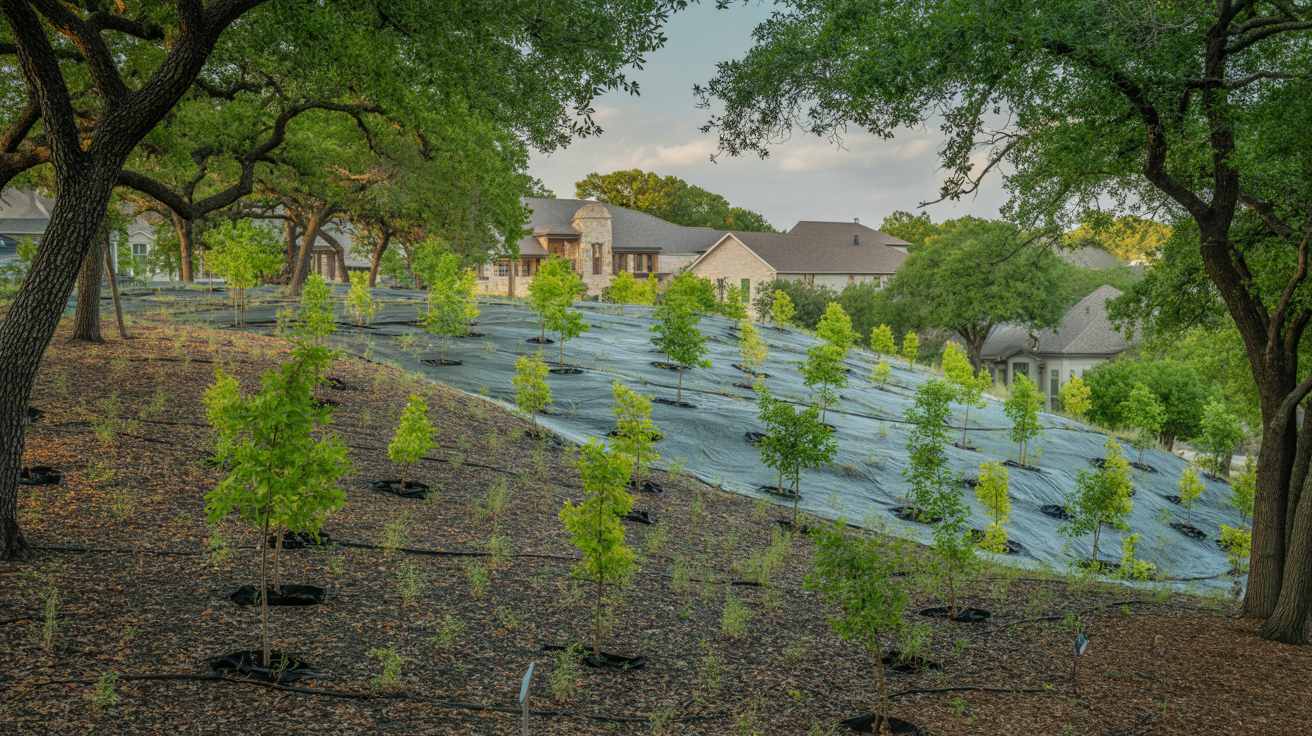
Stormwater management is another critical benefit. Tree canopies intercept rainfall, slowing its impact and reducing runoff. Root systems hold soil in place and increase infiltration. On properties where erosion is a concern, properly placed trees can be part of the solution. I've worked on sites where strategic tree planting helped stabilize slopes and manage drainage issues, providing benefits far beyond aesthetics.
Property Values and Quality of Life
Trees increase property values—this isn't just anecdotal, it's documented in real estate studies. Homes with mature trees in their landscapes consistently sell for higher prices than comparable homes without trees. Buyers recognize and value mature landscaping. When you plant trees, you're literally investing in your property's future value.
Beyond financial considerations, trees improve quality of life in ways that are harder to quantify but no less real. Shade for outdoor activities. Wildlife habitat that brings birds and other creatures to your yard. The simple beauty and sense of permanence that mature trees provide. These benefits accumulate over the years and decades as your trees grow.
Working with Austin's Urban Forest Vision
Austin's urban forest contains over thirty-three million trees, and the city has active goals to maintain and expand this incredible resource. Since 2020, tree protection regulations have preserved over 1.3 million inches of protected trees—a testament to the ordinances working as intended despite development pressure. The preservation rate in recent fiscal years has been above ninety percent, showing that development and tree preservation can coexist when proper planning occurs.
As someone who works in construction and land development, I appreciate that these regulations represent a balance. They're not designed to prevent all development, but to ensure that development happens thoughtfully, with consideration for our existing natural resources. When you understand and work within these frameworks, you can accomplish your project goals while contributing to rather than detracting from Austin's urban forest.
Community Resources and Support Programs
The city offers resources to help residents with tree planting and care. Free tree programs through partnerships with local organizations distribute thousands of trees annually to eligible residents. These programs focus on expanding canopy coverage in underserved areas and providing education about proper tree care.
Free mulch is available at city resource recovery centers—another example of the city supporting tree establishment and care. Educational resources about species selection, planting technique, and maintenance are available through city websites and partner organizations. Taking advantage of these resources can improve your success with tree planting projects.
Common Mistakes and How to Avoid Them
Let me share some of the most frequent problems I encounter and how you can avoid them. First, planting too deep. This single mistake probably kills more trees than any other. Always make sure that root flare is visible at the soil surface. If you're unsure where the root flare is when you're handling a containerized tree, carefully excavate the top of the root ball until you find it. It's often buried under several inches of nursery growing media.
Second, improper mulching. Remember—donut, not volcano. Mulch should never touch the trunk. And don't overdo it. Three to four inches is plenty. Some people seem to think more is better and pile mulch eight or ten inches deep. This creates anaerobic conditions, encourages pests, and can suffocate roots.
Species and Siting Errors
Choosing the wrong species for your site conditions is another major issue. That beautiful ornamental tree you saw in a magazine might not be adapted to Austin's climate. Those water-loving cypress or willow species might struggle if you don't have irrigation available. Do your research before you buy. Make sure the tree you're considering is appropriate for your specific site conditions and care capacity.
Siting mistakes create long-term problems. Trees planted under power lines will require constant pruning to keep them clear, or they'll eventually need removal. Trees planted too close to foundations or over utility lines create headaches as they mature. Think about the mature size and place your tree accordingly. It's much easier to position a sapling correctly than to deal with a mature tree that's in the wrong place.
Neglecting Early Care
Finally, neglecting that critical first two years of establishment care dooms many trees. I understand that life gets busy. But if you're going to invest the time and effort to plant a tree, commit to seeing it through establishment. That means consistent watering during the first growing season, monitoring for stress or problems, and providing care as needed. A tree that receives proper establishment care will reward you with decades of growth and beauty. A tree that's neglected during this critical period often struggles or dies, wasting your initial investment.
Moving Forward with Your Tree Planting Project
If you're planning to add trees to your Austin property, take the time to plan properly. Consider your site conditions, choose appropriate species, think about mature tree size and placement, and commit to providing proper establishment care. If your project involves construction or work near existing protected trees, understand the permitting requirements and Critical Root Zone protections early in your planning process.
At Earth in Motion, we've guided clients through countless tree planting and site development projects over the past two decades. We've learned what works in Austin's unique environment and what doesn't. Whether you're planting a single shade tree in your backyard or planning a larger development project that needs to preserve existing trees while adding new ones, the principles remain the same—respect the environment, follow best practices, and plan for the long term.
Trees represent one of the most valuable long-term investments you can make in your property. They provide decades of benefits, from cooling and shade to wildlife habitat and property value enhancement. When you choose the right species, plant at the right time, use proper technique, and provide good establishment care, you're setting up that tree for a lifetime of success. And when you do that successfully with tree planting in Austin, you're contributing not just to your own property but to the urban forest that makes our city unique and livable for everyone.
Frequently Asked Questions About Tree Planting in Austin
Do I need a permit to plant trees on my Austin property?
No, you don't need a permit to plant new trees on your property. However, if you're planning construction or landscaping work that might impact existing protected trees (19 inches or larger in diameter), that's where permits come into play. At Earth in Motion, I help clients navigate these regulations early in the planning process because it's much easier to design around protected trees from the start than to redesign a project later. We'll assess your existing trees, measure their critical root zones, and develop a plan that accomplishes your goals while staying compliant with Austin's tree protection ordinances.
What's the best time of year to plant trees in Austin, and why does timing matter so much?
The optimal planting window runs from October through March, with late fall through early spring being ideal. This timing works with Austin's climate instead of fighting it—you get cooler temperatures, occasional rainfall, and several months for root establishment before brutal summer heat arrives. I've seen too many clients lose trees because they planted during summer months when the combination of transplant shock and extreme heat creates unnecessary stress. At Earth in Motion, we plan tree installations during these optimal windows and prepare clients for the intensive watering commitment required if they absolutely must plant outside this timeframe.
How do I choose the right tree species that will actually thrive in Austin's unique conditions?
Species selection is where most tree planting projects succeed or fail, and Austin's alkaline soils, intense summer heat, and periodic droughts demand trees that are naturally adapted to these conditions. Native species like live oaks, Texas red oaks, cedar elms, and bur oaks have proven themselves over centuries here. When I work with clients at Earth in Motion, we start by evaluating your specific site conditions—soil type, sun exposure, available space for mature growth, and your maintenance capacity. Then we match those conditions with species that will thrive, not just survive. This upfront planning prevents the disappointment and expense of losing trees that were simply wrong for the location.
What are the most common planting mistakes that kill trees in Austin?
The biggest killer is planting too deep—when the root flare gets buried, it creates conditions for rot and disease that can take years to show symptoms but ultimately kill the tree. I also see people create "mulch volcanoes" piled against the trunk, choose species that can't handle our climate, or plant trees in locations where they'll outgrow the available space. At Earth in Motion, we focus on getting these fundamentals right from the start: proper hole dimensions, correct tree positioning with visible root flare, appropriate mulching technique, and strategic placement that considers mature tree size. These details might seem minor, but they determine whether your tree thrives for decades or struggles from day one.
How much ongoing care do newly planted trees need, and what factors affect the overall investment?
The first two years are critical for establishment, requiring consistent deep watering, monitoring for stress, and protecting the young tree from damage. Your investment depends on several factors: the size and species of trees you're planting, site preparation requirements, soil conditions, accessibility for equipment, and whether you're working around existing protected trees that require special handling. Larger specimen trees cost more but provide immediate impact, while smaller trees require less initial investment but need more time to mature. At Earth in Motion, I help clients understand these trade-offs and develop a planting and care plan that fits their budget, timeline, and long-term property goals while ensuring the best chance of success in Austin's challenging environment.
Hire Us