Tree Planting Rules and Requirements in Westlake Hills TX
If you're planning tree planting in Westlake Hills , you need to understand that this community takes its tree canopy seriously. I'm Chad Burnell, founder of Earth in Motion, and over my 20-plus years in construction and land management, I've learned that the Hill Country around Austin has some of the most beautiful—and most regulated—landscapes in Texas. Westlake Hills isn't just another suburb. It's a place where the rural character matters, where air quality and natural features are protected by law, and where every tree you remove or plant can trigger a permit process that catches property owners off guard if they don't plan ahead.
I've worked on projects all over Central Texas, and I can tell you that Westlake Hills stands out because of how the city balances development with preservation. When you're dealing with tree planting here, you're not just thinking about what looks nice in your yard. You're thinking about replacement ratios, approved species lists, three-year survival requirements, and city inspections. This isn't meant to scare you—it's meant to prepare you. If you know the rules going in, you can plan your project the right way, avoid penalties, and actually improve your property while staying on the city's good side.
Why Westlake Hills Regulates Tree Planting So Strictly
The first thing you need to understand is why Westlake Hills cares so much about trees. This isn't arbitrary red tape. The city's entire identity is built around maintaining a rural, natural character even though it sits just minutes from downtown Austin. When you drive through Westlake Hills, you see mature oaks, native species, and terrain that feels more like the Hill Country than a developed suburb. That's intentional, and the city protects it through strict tree and vegetation codes.
The regulations are designed to preserve air quality, protect natural features, and keep the community looking and feeling like a retreat from urban sprawl. Every time a tree comes down—whether for construction, disease, or just because a property owner wants it gone—the city asks: What are you going to put back? How will you replace what was lost? And will those replacement trees actually survive and contribute to the canopy long-term?
Here's what I've seen in my years working in Austin and the surrounding areas: Cities that don't enforce tree preservation end up losing their character fast. A few properties clear their lots, a few more follow, and suddenly the entire neighborhood feels different. Westlake Hills decided a long time ago that wasn't going to happen here, and the permitting and replacement requirements reflect that commitment.
When Do You Need a Permit for Tree Planting in Westlake Hills?
This is the part that confuses people. You don't need a standalone permit just to plant a tree on your property. If you want to add a few native oaks or pecans to your landscaping, you can generally do that without calling the city first. But the moment your planting activity is connected to tree removal , new construction, or significant landscaping changes, the city's oversight kicks in.
Let me break it down:
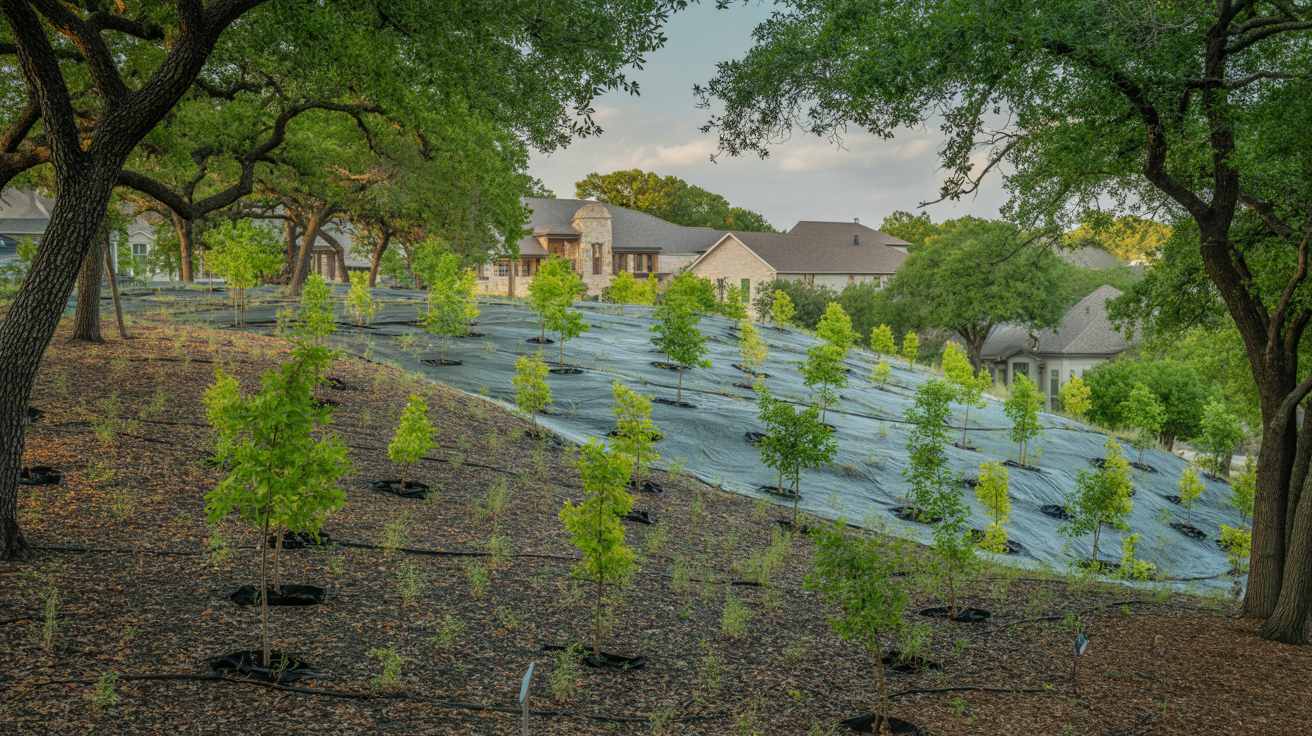
- Replacement Planting After Removal: If you remove a tree that's six inches or larger in diameter (measured about four and a half feet above the ground), you're going to trigger replacement requirements. The city will require you to plant new trees based on the size of what you removed, and those replacement trees have to come from an approved species list. This isn't optional—it's part of the permit process.
- New Construction Projects: If you're building a new home or adding a structure to an undeveloped lot, you'll need to provide a tree survey to the city inspector. That survey documents every significant tree on the property. Any trees you remove during construction will require replacement planting, and those replacements have to be worked into your site plan before you can proceed.
- Landscaping Modifications: Major changes to your landscaping—especially if they involve grading, excavation, or removal of vegetation—can also trigger city review. The inspector will want to know what you're taking out and what you're putting back.
The key principle here is that the city wants to make sure the tree canopy doesn't shrink. If you take something out, you're expected to put something back that will eventually provide similar environmental and aesthetic benefits. That's the whole point of the replacement system.
How the Permit Process Actually Works
When you're planning tree removal that will require replacement planting, you start by contacting the city to schedule an on-site meeting with a city inspector. This isn't a quick phone call—you're going to meet the inspector at your property, and they're going to document the size, species, location, and condition of the trees you want to remove.
If the inspector approves your request, you'll get a copy of the approved application. That document is your permit, and you need to keep it on-site during the work. Once the removal is done, you move into the replacement phase. You'll submit a replacement site plan showing exactly where you're going to plant the new trees, what species you're using, and what size they'll be when installed. The inspector reviews that plan, and once it's approved, you have 90 days to complete the planting.
Here's something important: That 90-day timeline can be extended if weather or other circumstances beyond your control make planting impractical. I've had projects in Central Texas where summer heat or unexpected drought pushed planting timelines back, and the city can be reasonable about that if you communicate early and document the issue.
After you finish planting, you notify the city inspector, and they come back out to verify that everything matches the approved plan. But your obligations don't end there. Those replacement trees have to survive for three full years, and the city can check on them during that period. If a tree dies, you're responsible for replanting it.
Understanding Replacement Ratios and Tree Sizing Requirements
This is where the math comes in, and it's critical to understand because it directly affects your project cost and timeline. Westlake Hills uses a tiered replacement ratio system based on the diameter of the tree you're removing. The bigger the tree you take out, the more you're required to put back.
Here's how it works:
- Trees 6 to 14 Inches in Diameter: You're required to replace 75% of the removed tree's caliper inches. The replacement trees have to be at least three inches in diameter when you plant them. So if you remove a 10-inch oak, you need to replace 7.5 inches of caliper. That could be three trees at 3 inches each (which gives you 9 inches total), or some other combination that hits the requirement.
- Trees 14 Inches or Larger: This is where it gets more expensive. You need to replace 150% of the removed tree's caliper inches, and the replacement trees have to be at least six inches in diameter. On top of that, removing a tree this large requires a city council variance, which means additional review and approval steps. If you're taking out a 20-inch tree, you need to replace 30 inches of caliper with trees that are each at least 6 inches in diameter. That's five 6-inch trees minimum.
The city measures tree diameters at 54 inches above ground for the trees being removed, and at 12 inches above ground for replacement trees. This standardization keeps everything consistent and objective, but it also means you need to be precise when planning your replacement strategy.
One thing I've learned over the years: Larger nursery stock costs significantly more than smaller material. A 6-inch diameter tree is a mature, established plant that requires specialized handling, transport, and installation. You're not just grabbing a sapling from a garden center. This is where working with professionals who understand the city's requirements and have relationships with quality nurseries becomes essential.
What Happens If You Can't Fit All the Required Replacement Trees on Your Property?
This is a real issue, especially on smaller lots or properties with challenging terrain. Westlake Hills sits in the Hill Country, and many properties have steep slopes, shallow soils, and limited flat space for planting. So what do you do if the math says you need to plant five 6-inch trees, but your property realistically only has room for three?
The city has a mechanism for this. If you can achieve approximately 90% of the required replacement inches through on-site planting—what the city calls "substantially complete"—you may be able to satisfy the remaining requirement through a monetary contribution to the city's landscape fund. That fund is used for public tree planting projects elsewhere in the community.
But here's the catch: This option only applies if you're hitting that 90% threshold. If your plan falls below that, you need city council approval, and the council has full discretion to decide whether they'll accept a financial contribution or require you to find another solution, such as relocating trees from one part of your property to another or adjusting your site plan to create more planting space.
I've worked on projects where creative site planning—like installing retaining walls to create level planting areas or clustering trees in strategic locations—allowed us to meet the requirements on-site without needing variances or contributions. But that level of planning has to happen early, before you start removing trees.
Choosing the Right Species from the Approved List
Westlake Hills maintains an approved species list (usually called "Exhibit A") that dictates which trees you can use for replacement planting. This list isn't random. It focuses on native and adapted species that thrive in the local climate, support the regional ecosystem, and match the aesthetic character the city wants to preserve.
When you're selecting species for your replacement plan, you're not just picking what looks nice. You're thinking about long-term survival, because those trees have to make it three years or you're replanting them. That means considering:
- Soil Conditions: Much of Westlake Hills sits on shallow, rocky Hill Country soils with good drainage but limited depth. Some species handle this better than others. Oaks like Lacey oak, Bur oak, and Chinkapin oak are often good choices because they're adapted to these conditions.
- Water Availability: Central Texas goes through dry spells, and while you'll need to irrigate newly planted trees, you want species that can eventually handle the natural rainfall patterns here without constant supplemental watering.
- Mature Size and Placement: The city prioritizes planting in setback areas and locations that provide screening between properties and streets. That means you need to think about how large the tree will get and whether it will accomplish the visual and environmental goals the city has in mind.
- Disease Resistance: Oak wilt is a serious issue in Central Texas, and it's worth noting when selecting species. Some oaks are more susceptible than others, and the city has pruning restrictions in place to help manage the spread of this fungal disease.
The city inspector has to approve your species selections based on the specific location and intended function of each tree. If you propose a species that's on the approved list but doesn't make sense for your site conditions, the inspector can require you to choose something else. This is why it's valuable to consult with professionals who know the local terrain, soils, and tree species before you finalize your replacement plan.
The Three-Year Survival Requirement and What It Means for Your Budget
This is the part of the process that catches people off guard. You plant the trees, the city inspects them, and you think you're done. But Westlake Hills requires all replacement trees to survive for a minimum of three years. If a tree dies during that period, you're responsible for replanting it at your own expense.
Think about what that means. You're not just paying for the initial installation—you're committing to three years of maintenance, irrigation, and monitoring. In Central Texas, we have hot summers, occasional droughts, and unpredictable weather patterns. Even with proper installation, some trees don't make it. That's just reality.
So how do you improve your chances of hitting that three-year survival target?
- Site Preparation: Don't just dig a hole and drop a tree in. Proper site preparation includes assessing drainage, amending soil if necessary (especially in areas with heavy clay or compacted soils), and ensuring the tree has enough room for root development.
- Irrigation: Newly planted trees need consistent water, especially in their first year. You'll want to set up a watering schedule and stick to it, adjusting for rainfall and temperature. Drip irrigation or soaker hoses work well for this.
- Mulching: A good layer of mulch around the base of the tree (but not piled against the trunk) helps retain moisture, regulate soil temperature, and suppress weeds that compete for water and nutrients.
- Monitoring: Check on your trees regularly during that three-year period. Look for signs of stress—wilting leaves, discoloration, stunted growth—and address problems early before they become fatal.
The three-year survival requirement is meant to ensure accountability. The city wants to see that you're not just planting trees to check a box—you're planting trees that will actually contribute to the canopy long-term. But it also means you need to factor ongoing care into your project budget and timeline.
What Drives the Cost of Tree Planting and Replacement in Westlake Hills?
People always want to know what tree replacement is going to cost them, and the honest answer is: It depends on a lot of factors. I can't give you a specific number because every project is different, but I can explain what drives the cost so you can plan accordingly.
The biggest cost driver is the size of the tree you're removing. As I explained earlier, larger trees trigger higher replacement ratios. A 20-inch oak that requires 150% replacement is going to cost significantly more than a 10-inch oak that only requires 75% replacement. You're buying more trees, and those trees need to be larger at installation.
The second factor is the availability and rarity of the species you're planting. Some species on the approved list are common and readily available from local nurseries. Others are harder to find, especially in larger sizes, and that scarcity drives up the price. Native species like certain oaks and Texas ash can vary widely in availability depending on the time of year and what nurseries have in stock.
Site conditions play a major role as well. If your property has steep terrain, poor access, or challenging soil conditions, the installation costs go up. You might need specialized equipment to get trees into place, or extensive soil amendments to give them a fighting chance at survival. Rocky Hill Country soils can require extra excavation and backfill with quality topsoil, and that adds labor and material costs.
Irrigation setup is another consideration. To meet the three-year survival requirement, you're going to need a reliable watering system for newly planted trees. That might mean installing drip lines, setting up temporary irrigation, or committing to manual watering with hoses. All of that takes time and resources.
Finally, there's the risk factor. If you're planting trees in challenging conditions or during a tough season (like mid-summer in Texas), there's a higher chance some trees won't make it through the three-year period. That means budgeting for potential replanting costs down the line.
The key takeaway here is that tree replacement in Westlake Hills is not a trivial expense, especially if you're removing large, mature trees. The city's replacement ratios are designed to make property owners think twice before cutting down significant trees, and the cost structure reinforces that message.
Oak Wilt and Other Tree Health Considerations in Central Texas
If you're planting trees in Westlake Hills, you need to be aware of oak wilt. This fungal disease is at epidemic levels in Central Texas, and it's one of the reasons the city has strict regulations around tree removal, pruning, and replacement.
Oak wilt is caused by a fungus that invades the water-conducting system of oak trees, essentially choking off the tree's ability to move water and nutrients. The disease spreads two ways: through fungal mats that form under the bark of infected trees (which attract beetles that carry spores to fresh wounds on healthy trees), and through interconnected root systems between adjacent trees.
Red oaks—including Spanish oak and Shumard oak—are extremely susceptible. Once infected, these trees can die within four to six weeks. Live oaks are also vulnerable, and because their root systems often connect underground, the disease can spread from tree to tree at about 75 feet per year if left unchecked.
Here's why this matters for tree planting: When you're selecting species for replacement, you want to consider disease resistance. Some oaks are more resistant than others. Bur oak, Lacey oak, and Chinkapin oak tend to be less susceptible to oak wilt than red oaks or live oaks. That doesn't mean you can't plant live oaks—they're a huge part of the Hill Country landscape—but it does mean you need to be aware of the risks and take precautions.
The city has pruning restrictions in place to help limit oak wilt transmission. You're only allowed to trim or cut red oaks and live oaks between July 1st and January 31st, and it's prohibited from February 1st through June 30th. That's because the beetles that spread the disease are most active in spring, and fresh pruning wounds create entry points for infection. If you have to make cuts during the restricted period (for safety reasons, for example), all wounds must be immediately sealed with commercial pruning paint.
When you're planting replacement trees, proper technique matters for disease prevention too. Don't create unnecessary wounds or damage the bark during installation. Use clean tools and equipment. And if you're planting near areas where oak wilt has been detected, consider trenching to sever root connections between trees, which can help contain the spread.
Working with the City Inspector: What to Expect
The city inspector is going to be your primary point of contact throughout the tree removal and replacement process, so it's worth understanding how that relationship works and how to make it as smooth as possible.
First, understand that the inspector's job is to enforce the city's tree preservation ordinances. They're not there to make your life difficult, but they are there to make sure you follow the rules. The best approach is to be proactive, transparent, and prepared when you meet with them.
When you schedule your on-site meeting, have your plans ready. Know which trees you're proposing to remove and why. If you're dealing with diseased or dying trees, have documentation ready—photos, notes on symptoms, or even a letter from a certified arborist if there's any question about the tree's condition.
The inspector will measure and document the trees, and they'll discuss replacement requirements with you on-site. This is a good time to ask questions. If you're not sure how the replacement ratios work or where the city wants you to prioritize planting, ask. It's much easier to adjust your plan early than to redo work later because you misunderstood the requirements.
After you submit your replacement site plan, the inspector will review it and either approve it or request changes. If they ask for modifications, respond quickly and professionally. Maybe they want you to adjust the placement of a tree to provide better screening, or maybe they want you to swap one species for another based on site conditions. These requests are usually reasonable, and working with the inspector rather than fighting them will save you time and headaches.
Once your trees are planted, the inspector comes back for a final verification. They're checking that the trees match the approved plan in terms of species, size, and location. If everything looks good, you're cleared—but remember, you still have the three-year survival requirement to meet.
If you run into disputes with the inspector—maybe you believe a tree is diseased and should be exempt from replacement requirements, but the inspector disagrees—you have options. You can submit a letter from a certified arborist to support your position. That letter goes to the city administrator for review. If the administrator doesn't side with you, you can appeal to the city council. The process is formal, but it exists to give property owners a voice when they believe the inspector's decision is incorrect.
Penalties for Non-Compliance and Why You Should Take Them Seriously
Westlake Hills doesn't mess around with tree preservation violations. If you remove trees without a permit, fail to complete required replacement planting, or plant trees that die and never get replaced, you're looking at penalties that can add up fast.
The city can fine you up to $2,000 per tree removed in violation of the ordinances. Each tree is treated as a separate offense, so if you cut down three trees without a permit, that's three separate fines. On top of the fines, you're still required to complete the replacement planting. The penalty doesn't replace your obligation—it's in addition to it.
Violations are classified as Class C misdemeanors, which means the city has significant enforcement authority. They can pursue legal action if necessary, and the fines plus legal costs can quickly exceed whatever savings you thought you'd achieve by skipping the permit process.
But beyond the financial penalties, non-compliance creates a record with the city that can complicate future projects. If you're planning to build, renovate, or make other changes to your property down the line, having a history of tree ordinance violations on file doesn't help.
The smart move is to follow the process from the start. Contact the city before you remove any significant trees. Work with professionals who understand the local regulations. Submit your replacement plans on time and complete the planting within the required 90-day window. Monitor your trees during the three-year survival period and address any problems immediately.
I've been in construction and land management long enough to know that cutting corners almost always costs you more in the long run. Tree ordinance violations are no exception. The city's enforcement is real, and the penalties are designed to make sure property owners take the regulations seriously.
Practical Tips for Success with Tree Planting and Replacement in Westlake Hills
Based on my 20-plus years of working in Central Texas, here's what I recommend for property owners who are planning tree removal and replacement projects in Westlake Hills:
- Start the Process Early: Don't wait until you're ready to break ground on a construction project or until a tree is actively dying to start dealing with permits. Contact the city inspector as soon as you know you'll need to remove trees. The permitting and approval process takes time, and rushing it creates problems.
- Hire Professionals Who Know the Area: Whether it's an arborist, a tree service company, or a contractor like Earth in Motion who understands land management in the Hill Country, working with people who know Westlake Hills' regulations and terrain will save you money and stress. We know which species work best in these soils, how to handle steep terrain, and how to navigate the city's inspection process.
- Plan for Long-Term Maintenance: The three-year survival requirement means you're making a long-term commitment when you plant replacement trees. Budget for irrigation, monitoring, and potential replanting. Don't treat it as a one-time expense.
- Choose Species Strategically: Select trees from the approved list that are well-suited to your property's conditions. Consider disease resistance, water needs, and mature size. A tree that's appropriate for one part of Westlake Hills might not work on your property if you have different soil or drainage conditions.
- Document Everything: Keep copies of all permits, approved site plans, and communications with the city inspector. Take photos of your property before removal, during planting, and at regular intervals during the three-year survival period. If any disputes arise, good documentation protects you.
- Communicate with the City: If weather delays your planting timeline, if a tree dies during the survival period, or if you need to make changes to your approved plan, notify the city inspector right away. They're more likely to work with you if you're proactive and transparent.
The bottom line is this: Tree planting and replacement in Westlake Hills require planning, patience, and a willingness to follow the city's rules. The regulations exist for good reasons—they protect the character and environmental quality that make this community special. As someone who's spent decades working in Central Texas, I respect what Westlake Hills is trying to preserve, and I've seen firsthand that projects go smoothly when property owners understand the requirements and work with the system rather than against it.
Why Earth in Motion Is the Right Partner for Your Tree Planting Project
At Earth in Motion, we've been handling complex land management projects in the Austin area since 2005. As a certified Service-Disabled Veteran-Owned Small Business, we bring military discipline and attention to detail to every job we take on. When it comes to tree planting and replacement in Westlake Hills, we understand both the regulatory side and the practical side of getting trees in the ground and keeping them alive.
We know the terrain here—the rocky soils, the steep slopes, the drainage challenges. We know which species work and which ones struggle. We know how to work with city inspectors, how to create replacement plans that get approved, and how to install trees in a way that maximizes their chances of hitting that three-year survival target.
Beyond tree planting, we handle the full scope of site work that often goes along with these projects. If you need grading to create planting areas, retaining walls to manage slopes, or irrigation systems to support new trees, we can integrate all of that into a comprehensive plan. Our 20 years of hands-on construction experience means we think about how all the pieces fit together, not just the trees in isolation.
What drives us is solving problems for our clients. Tree planting in Westlake Hills can feel overwhelming when you're facing replacement ratios, species requirements, and three-year survival mandates. We simplify that process. We handle the details, communicate with the city on your behalf, and deliver results that meet your needs and comply with local regulations.
If you're planning a project that involves tree removal or planting in Westlake Hills, reach out to us early. Let's walk your property, talk through your goals, and develop a plan that works. Whether you're building a new home, renovating an existing property, or dealing with diseased trees that need to come out, we have the experience and local knowledge to guide you through the process from start to finish. Tree planting and replacement don't have to be a source of stress—with the right team and the right approach, you can navigate Westlake Hills' requirements successfully and end up with a property that's more beautiful and more valuable than when you started, and that's exactly what we aim to deliver with every tree planting in Westlake Hills project we undertake.
Frequently Asked Questions About Tree Planting in Westlake Hills
Do I need a permit to plant trees on my property in Westlake Hills?
You don't need a standalone permit just to add trees to your landscaping, but if your planting is connected to tree removal, new construction, or significant landscaping changes, the city's oversight kicks in. At Earth in Motion, I help clients understand when their tree planting will trigger permit requirements. If you're removing trees six inches or larger in diameter, you'll need replacement planting that follows specific ratios and approval processes. We handle all the coordination with the city inspector and ensure your replacement plan meets Westlake Hills' requirements from the start.
What are the replacement requirements if I remove a tree in Westlake Hills?
Westlake Hills uses a tiered replacement system based on the size of the removed tree. For trees 6 to 14 inches in diameter, you must replace 75% of the removed caliper inches with trees at least 3 inches in diameter. For trees 14 inches or larger, you need city council variance approval and must replace 150% of the caliper inches with trees at least 6 inches in diameter. At Earth in Motion, I help clients calculate these requirements, select appropriate species from the city's approved list, and develop replacement site plans that get approved quickly. We also handle the three-year survival requirement by installing trees properly and providing guidance on long-term care.
How much does tree replacement cost in Westlake Hills?
The cost depends on several key factors that I evaluate for each project at Earth in Motion. The biggest driver is the size of the tree you're removing—larger trees trigger higher replacement ratios and require larger nursery stock, which costs significantly more. Site conditions also play a major role; steep terrain, rocky Hill Country soils, and poor access increase installation costs. Species availability affects pricing too, as some approved species are harder to find in larger sizes. Finally, you need to budget for three years of maintenance and potential replanting if trees don't survive. I help clients understand all these cost factors upfront and develop realistic budgets that account for both initial installation and long-term survival requirements.
What species can I plant for tree replacement in Westlake Hills?
Replacement trees must come from the city's approved species list, which focuses on native and adapted species that thrive in Central Texas conditions. The list includes various oaks like Lacey oak, Bur oak, and Chinkapin oak, which handle our rocky soils and climate well. At Earth in Motion, I help clients select species strategically based on their specific site conditions—considering factors like soil depth, drainage, disease resistance, and mature size. The city inspector must approve your species selections based on location and intended function, and I work directly with inspectors to ensure your choices meet their requirements. My 20 years of experience in the Hill Country means I know which species will actually survive and thrive on your property.
What happens if my replacement trees die during the three-year survival period?
Westlake Hills requires all replacement trees to survive for three full years, and if they die during that period, you're responsible for replanting them at your own expense. At Earth in Motion, I maximize your trees' survival chances through proper site preparation, appropriate species selection, and installation techniques that work with our challenging Hill Country conditions. I help clients set up irrigation systems, establish proper mulching, and develop monitoring schedules to catch problems early. If issues do arise, I provide guidance on addressing them quickly before they become fatal. My goal is to install trees that not only meet the city's requirements but actually contribute to your property's canopy long-term, which is why I focus on matching the right species to your specific site conditions from the beginning.
Hire Us